
Understanding the eight levels of functional aging and why your age doesn't define your abilities.
Have you ever met someone in their 80s who seems to have more energy and physical ability than someone in their 60s? Maybe they're still hiking, traveling, playing tennis, or keeping up with their grandchildren without missing a beat.
On the other hand, you probably know someone much younger who struggles with everyday activities like climbing stairs, getting out of a chair, or walking through the grocery store.
How can two people of similar ages have such different abilities?
The answer has a lot to do with something called functional age. And understanding it might just change the way you think about getting older.
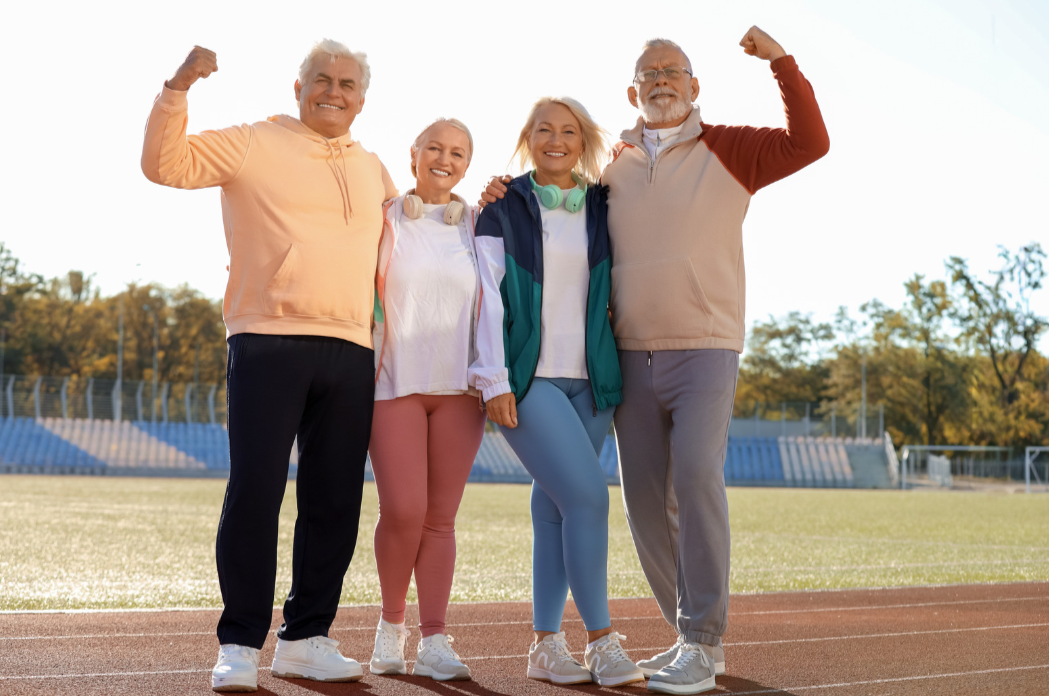
Your age tells only part of the story
We tend to put a lot of emphasis on chronological age. It's the number of birthdays we've celebrated, and it's often how we define what someone should or shouldn't be able to do.
But chronological age doesn't necessarily reflect how well your body functions.
Your functional age describes your physical capabilities—how well you move, maintain your balance, generate strength, tolerate activity, and perform the tasks that make up your everyday life.
For example, a 75-year-old who walks several miles a day, exercises regularly, and easily gets up from the floor may function at a much higher level than a 60-year-old who spends most of the day sitting and struggles with basic mobility.
Of course, genetics, chronic health conditions, injuries, and other factors influence our abilities. But lifestyle and physical activity can make a tremendous difference.
And here's something I really want you to understand: Your current functional level doesn't necessarily have to be your permanent level.
The eight levels of functional aging
One useful way to understand our physical abilities as we age is through a hierarchy of functional levels. This approach builds on concepts described by physical therapist and researcher Dr. C. Jessie Jones and colleagues, and particularly the functional fitness framework developed by Dr. Waneen Spirduso.
The eight-level version we'll explore in this series is a practical adaptation of these concepts, not a standardized medical classification or diagnostic test.
Let's take a quick look at the functional aging hierarchy and what each level means.
1. Elite: These individuals demonstrate exceptional physical fitness for their age. Think competitive senior athletes, marathon runners, or people who regularly participate in demanding physical activities.
2. Fully Fit: These adults may not be competitive athletes, but they're strong, active, and capable of participating in a wide variety of recreational activities without significant limitations.
3. Semi-Fit: These individuals are generally active and independent but may notice some decline in endurance, strength, flexibility, or balance. They can still participate in most activities, although they may need to modify certain movements.
4. Higher Independent: These adults manage their daily activities comfortably and can handle more demanding tasks, such as carrying groceries, doing yardwork, or climbing stairs. However, they may not participate in regular fitness activities and may have less physical reserve than those in higher levels.
5. Lower Independent: These individuals can still manage their basic daily activities but may find certain tasks increasingly challenging. Getting up from a low chair, walking longer distances, or carrying heavier objects may require more effort.
6. Pre-Frail: At this level, individuals may begin showing signs of reduced strength, endurance, walking speed, or overall activity. They may tire more easily and become increasingly vulnerable to falls or illness-related declines. This is an important opportunity for intervention.
7. Frail: These individuals experience significant physical limitations and reduced physiological reserve. Everyday activities may be exhausting, and they're more vulnerable to falls, hospitalization, and loss of independence.
8. Dependent: At this level, individuals require assistance with some or many essential daily activities, such as bathing, dressing, transferring, or moving around safely.
These categories describe general patterns, not rigid boundaries. Someone might demonstrate characteristics of more than one level, and medical conditions or temporary setbacks can affect their abilities.
So, where do you fall?
Before you answer that question, consider how you function during a typical day.
Can you get up from a chair without using your hands?
Can you climb a flight of stairs without becoming overly fatigued?
Can you walk comfortably for 20–30 minutes?
Can you get down to the floor and back up again?
Can you carry groceries, do household chores, and participate in activities you enjoy?
Do you feel confident walking on uneven ground or navigating crowded environments?
These questions aren't a formal assessment, but they can help you start thinking about your functional abilities rather than simply your age.
And remember, independence doesn't necessarily mean fitness. You may be managing your everyday activities just fine while gradually losing strength, endurance, or balance that you'll need in the future.
Why knowing your functional level matters
One of the biggest mistakes we make when thinking about aging is assuming that physical decline is inevitable and there's little we can do about it.
Yes, our bodies change as we get older. But there's a difference between normal age-related changes and the additional decline that comes from inactivity, deconditioning, or untreated movement problems.
Someone who's beginning to struggle with stairs might benefit from targeted leg strengthening. Someone who's feeling less steady might improve with balance and reactive stepping exercises. And someone who's already experiencing frailty may still be able to improve strength and mobility with an appropriately designed program.
The goal isn't necessarily to become an elite athlete. It's to maintain or improve the physical abilities that allow you to live the life you want.
For one person, that might mean returning to pickleball. For another, it might mean being able to walk to the mailbox safely or get out of bed without assistance.
Both are meaningful accomplishments.
Functional aging isn't a one-way street
I particularly like this way of looking at aging because it shifts our focus away from what we've lost and toward what we can still improve.
Our functional abilities can change in either direction. Illness, injury, hospitalization, or prolonged inactivity can cause a decline, sometimes surprisingly quickly.
But with the right combination of strengthening, balance training, cardiovascular exercise, mobility work, and appropriate medical care, many people can regain abilities they thought were gone for good.
That doesn't mean everyone can move to the highest levels. Certain medical conditions and disabilities may create lasting limitations, and not all declines are reversible.
But improvement is often possible, even when complete recovery isn't.
Let's change the conversation about aging
Rather than asking, "What should I expect at my age?" I'd encourage you to ask something different:
"What do I want to be able to do, and what can I do today to help preserve that ability?"
That's a much more useful question.
Throughout this series, we're going to explore each of the eight functional levels in greater detail. We'll talk about the characteristics of each level, common challenges, and practical ways to maintain or improve your abilities.
We'll also discuss how to recognize when your functional abilities may be changing—and why addressing those changes early can make such a difference.
At ProActive Therapy and Wellness, this is at the heart of what I do: helping people move better, build confidence, and maintain their independence for as long as possible.
Because while we can't stop the birthdays from coming, we can certainly influence how we function as the years go by.
Your age is just a number. Your abilities tell a much more interesting story.
And the next chapter is still being written.
Coming next in the series
Part 2: Elite and Fully Fit Aging — What Does It Really Mean to Age at the Top of Your Game?
We'll explore what separates exceptionally fit older adults from the rest of the population, and what we can learn from their habits—even if we have no desire to run a marathon!