
Recently, I was speaking with an older client about his walking stride when he responded, “Wait until you’re 79.”
That comment stayed with me. It’s something I’ve heard in different forms throughout my career: “You’ll understand when you’re my age.” “That’s what happens when you get old.” “What do you expect at 80?”
I’m going to start calling this age blaming—giving our birthdays the credit for every change in our strength, balance, and mobility.
I understand where it comes from. Getting older brings changes, and some days those changes are frustrating. But when we decide that age explains everything, we can overlook things we actually have some ability to change.
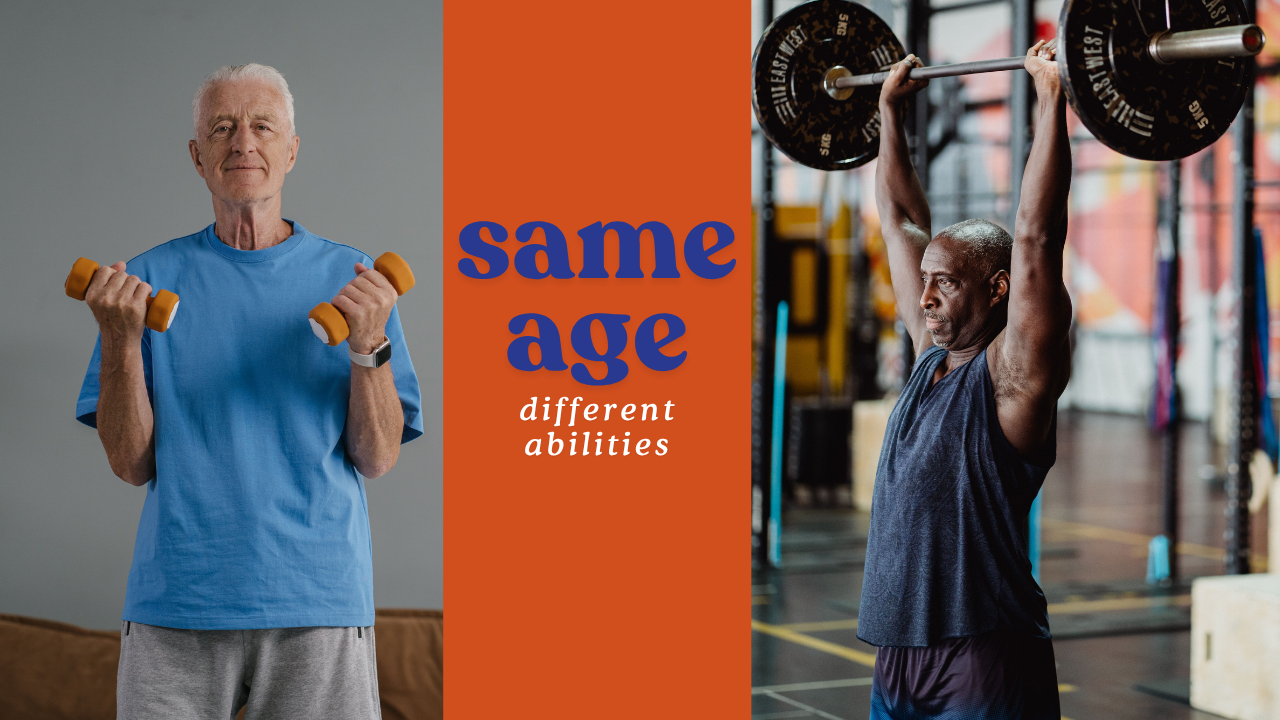
Is it your age—or what you’re no longer doing?
Maybe you’re taking shorter walks. You stopped getting down on the floor because getting back up became difficult. You avoid stairs, carry smaller loads, or let someone else do the gardening.
Each adjustment may make sense at the time. Together, though, they can gradually reduce the demands you place on your body.
Then, when everyday tasks become harder, it’s easy to say, “I’m just getting old.”
Sometimes reduced activity is a substantial part of the picture. Strength, endurance, and balance need regular attention. The National Institute on Aging notes that physical activity can improve everyday function and help protect against age-related losses in muscle strength and function. National Institute on Aging
Aging does affect our bodies. We may need more recovery time, different exercises, or a more deliberate approach to staying strong. But a birthday doesn’t tell us why someone’s stride has shortened or why getting out of a chair has become difficult. Those changes deserve a closer look.
“You’re not my age. You don’t understand.”
There’s some truth in that statement. I haven’t personally experienced being 79, and I won’t pretend I know exactly how someone else feels in their body.
But I have worked with older adults for more than 30 years.
During that time, I’ve worked with people across a wide range of physical abilities. I’ve seen people who were frail and struggling with everyday movement, and others of similar ages who were strong, steady, and capable.
One pattern I’ve noticed repeatedly is that the people who maintained more physical ability generally worked at it. They moved regularly. They challenged themselves. They made activity part of their lives.
Among people who were more frail, reduced activity was often part of the picture, too—sometimes as a cause, sometimes as a consequence of health problems.
My experience doesn’t let me feel what you feel. It does help me recognize when there may be an opportunity to improve something you’ve assumed you simply have to accept.
Effort matters, and everyone’s circumstances are different
I want to be careful here: being frail doesn’t mean someone hasn’t tried hard enough.
Illness, injuries, neurological conditions, pain, and access to support all affect what people can do. Sometimes people become less active because movement has become difficult or frightening. That deserves understanding and help.
Still, activity is one important piece we can often influence.
In the LIFE clinical trial, more than 1,600 adults ages 70–89 who were at risk for mobility disability participated in either a structured physical activity program or health education. The activity program reduced the risk of losing the ability to walk 400 meters by 18% over an average of 2.6 years. PubMed
That doesn’t promise the same outcome for everyone. It does show that even later in life, purposeful activity can make a meaningful difference.
Ask a different question
Instead of ending the conversation with “It’s my age,” try asking, “What might be contributing to this, and what could help?”
If stairs are harder, could leg strength be part of the problem? If you’re walking less, is pain, fatigue, or fear holding you back? If you feel unsteady, would an assessment help identify what needs attention?
The answer may involve strengthening, balance practice, improving mobility, addressing a health problem, or adjusting how you approach an activity.
Staying active also means giving your body the kind of practice it needs. Walking is valuable, but strength and balance deserve attention alongside it. National Institute on Aging
You don’t have to keep up with someone else. Start with your own abilities and goals, and get guidance when you need it. A new or worsening walking problem deserves assessment rather than an automatic explanation of “old age.”
Coming next: What does your functional level tell you?
This brings me to an upcoming series about functional levels—a way to explore what we can do physically, beyond the number on our birthday cake.
We’ll look at eight levels: Elite, Fully Fit, Semi Fit, Higher Independent, Lower Independent, Pre-Frail, Frail, and Dependent.
These categories will give us a starting point for discussing strength, balance, endurance, mobility, and the support someone may need. They aren’t a grade or a permanent identity.
We’ll explore what each level can look like in everyday life and what working toward greater ability might involve.
Because before we blame age, I’d like us to get curious about what’s possible.