
After Hip Replacement:
Why Regaining Normal Movement Matters More Than You Think
A total hip replacement (THA) can be life-changing. For many people, the constant pain from arthritis disappears almost immediately, making it possible to walk farther, sleep better, and return to activities they haven't enjoyed in years.
But replacing the joint is only part of the journey.
Having a new hip doesn't automatically mean you're moving normally again. One of the biggest challenges after surgery isn't the joint itself—it's teaching your body to move the way it was designed to move again.
As a physical therapist, I often see people months, and sometimes even years, after a hip replacement who are still walking with a limp, avoiding certain movements, or relying on muscles that were never meant to do the job. Many assume that's simply the way life is after a hip replacement.
Fortunately, it doesn't have to be.
With the right combination of flexibility, strength, and movement training, most people can continue improving long after the incision has healed.
Your Body Learned to Protect the Painful Hip
Before surgery, many people spend months—or even years—changing the way they move because of pain.
Without realizing it, they begin to:
Lean away from the painful side.
Take shorter steps.
Rotate the foot outward.
Avoid bending the hip.
Shift more weight onto the opposite leg.
These adjustments help reduce pain at the time, but over months they become automatic habits.
Even after the damaged joint has been replaced, your nervous system often continues using those same movement strategies because that's what it has learned. Unless these habits are intentionally corrected, they can remain long after your hip has healed.
Why Compensations Matter
Our bodies are remarkably good at finding ways to accomplish a task. If one joint doesn't move well, another joint—or another group of muscles—usually picks up the slack. This is called compensation.
While compensation is helpful in the short term, relying on it for months or years can place extra stress on other parts of the body.
Over time, abnormal movement patterns can contribute to:
Low back pain
Knee pain
Hip muscle weakness
Poor balance
Decreased walking efficiency
Earlier fatigue
Increased risk of falls
Perhaps even more importantly, compensatory movement patterns prevent the muscles around your new hip from doing the job they were designed to do.
The goal after hip replacement isn't simply walking without pain—it's walking efficiently and confidently.
Flexibility and Strength Work Together
Some people focus only on stretching after surgery, while others jump straight into strengthening exercises. The truth is that both are essential.
Your hip needs enough flexibility to move comfortably through everyday activities like walking, climbing stairs, getting into a car, or putting on your shoes. At the same time, the muscles surrounding the hip need to become strong enough to support and control those movements.
As flexibility improves, strengthening the gluteal muscles, thigh muscles, and core helps restore stability and encourages your body to move with greater confidence. When flexibility and strength improve together, normal movement begins to return.
Understanding Hip Precautions
One of the most common questions after surgery is: "How long do I have to follow my hip precautions?"
The answer depends on the surgical approach your orthopedic surgeon used and your individual situation.
Hip precautions are intended to reduce the risk of dislocation while the tissues surrounding the new joint heal. Depending on the type of surgery, precautions may include avoiding excessive hip bending, crossing your legs, or rotating the leg beyond certain limits.
Today, many surgeons use newer surgical techniques and implants that allow fewer restrictions than in the past. Some people who undergo an anterior hip replacement have very few or no precautions, while others—particularly those with a posterior approach—may be asked to follow precautions for approximately six weeks or longer.
The important point is this:
Always follow the instructions provided by your orthopedic surgeon.
Hip precautions are temporary. They exist to protect healing tissues—not to limit your movement forever. Once your surgeon clears you, gradually restoring your hip's normal range of motion becomes an important part of returning to everyday activities.
Unfortunately, many people continue avoiding certain movements simply because they're afraid, even after they've been told it's safe. That fear can contribute to ongoing stiffness and unnecessary compensations.
Seven Foundational Exercises for Restoring Hip Motion and Strength
Once your surgeon or physical therapist says these exercises are appropriate, they can help restore mobility while rebuilding the strength needed for everyday life.
Heel Slides
Lying on your back, slowly slide your heel toward your buttocks and then straighten your leg again.
Heel slides gently improve hip flexion while encouraging smooth movement through the joint. Focus on slow, controlled movement rather than trying to bend as far as possible.
Forward and Backward Stepping
Walking requires your hip to move both in front of and behind your body. Many people continue taking short steps after surgery because that's what became comfortable before the operation.
Practice stepping forward and backward with the operated leg, keeping the other leg still but allowing your weight to rock back and forth. This stepping exercise helps restore a more natural walking pattern while improving balance and confidence. Doing this with the opposite leg is also helpful to restore stability strength in the operated leg.
Side Stepping
Side stepping strengthens the muscles on the outside of the hip that stabilize your pelvis every time you stand on one leg during walking.
Keep your body upright and avoid leaning. Let the hip muscles do the work rather than shifting your trunk.
Gentle Hip External Rotation
Turning the leg outward helps restore the movements needed to put on shoes and socks, get in and out of a car, and change direction while walking.
This is best done lying on your back with your knees bent, gently moving your knees apart like butterfly wings.
Always perform this exercise within the limits established by your surgeon or physical therapist.
Heel Slide Up the Opposite Shin
As your mobility improves, gently slide your heel up the opposite shin. This movement combines hip flexion, external rotation, and coordination in a way that closely resembles many daily activities, like putting on your socks and shoes.
Move only within a comfortable range and stop if your surgeon has instructed you to avoid this movement.
Bridging
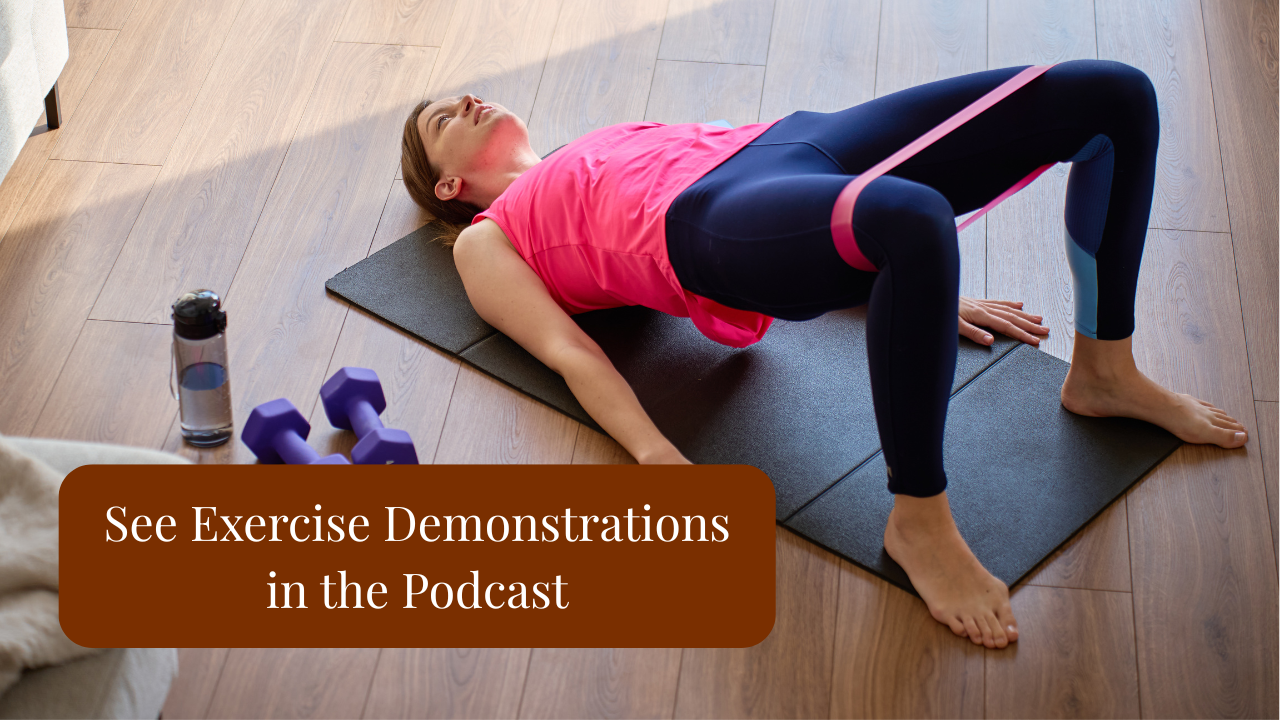
Bridging is one of the best early strengthening exercises after a hip replacement because it activates the gluteal muscles, hamstrings, and core while encouraging the hip to fully extend.
Lie on your back with your knees bent. Tip your pelvis back, squeeze your buttocks, and slowly lift your hips off the bed. Hold for a moment before lowering with control.
Rather than trying to lift as high as possible, focus on moving smoothly and using both legs equally.
Sit-to-Stand
Standing up from a chair is one of the most important movements we perform every day. It's also one of the best exercises for rebuilding leg strength after hip replacement as it’s truly a functional movement.
Begin by using the armrests or your hands on the chair to help push yourself up while focusing on leaning your nose over your toes before standing. As your strength improves, gradually decrease how much you use your hands. Progress from pushing with both hands, to one hand, then just your fingertips, and eventually stand without using your hands at all.
Remember, the goal isn't simply standing up—it's standing with control, good posture, and equal weight through both legs.
Focus on Quality, Not Quantity
It's tempting to count repetitions, but how you move matters far more than how many you perform. Ten repetitions with excellent form will do far more for your recovery than thirty performed with poor mechanics.
As you exercise, focus on:
Standing or sitting tall.
Moving smoothly.
Breathing normally.
Using both legs equally.
Avoiding momentum.
Every quality repetition teaches your brain to replace old compensatory habits with healthier movement patterns.
Your New Hip Is Only the Beginning
Hip replacement surgery gives you a new joint. Rehabilitation teaches your body how to use it.
By restoring flexibility, rebuilding strength, and practicing normal movement patterns, you give yourself the best opportunity to enjoy everything your new hip has to offer.
Whether your goal is walking through the neighborhood, gardening, hiking, traveling, or simply being able to put on your own socks and shoes, those activities become much easier when your body moves the way it was designed to move.
Don't settle for simply being pain-free. Aim to move well.
Want to See These Exercises in Action?
Reading about an exercise is helpful, but seeing it performed correctly can make all the difference.
Be sure to watch my accompanying podcast, where I demonstrate each of these exercises, explain common mistakes to avoid, and share tips to help you regain normal movement safely after your hip replacement.
If you'd like personalized guidance, ProActive Therapy and Wellness offers one-on-one evaluations designed to help you restore flexibility, rebuild strength, eliminate compensatory movement patterns, and return to the activities you love. Schedule a free consultation to learn how we can help you move with greater confidence and independence.