
Why Slowing Down Isn’t “Just Aging” — It’s Often Deconditioning
Somewhere along the way, we started blaming normal changes in activity on “getting older.” We say things like, “Well, I’m just slowing down,” or “That’s what happens after 60.” But here’s what I’ve seen over and over again in more than 30 years working with adults 60 and beyond: what looks like aging is often deconditioning.
And there’s a big difference. Aging is biological. Deconditioning is reversible. That distinction matters more than most people realize.
What Is Deconditioning, Really?
Deconditioning simply means the body has adapted to doing less.
Muscles lose strength surprisingly quickly when they’re not challenged. The National Institute on Aging notes that adults can lose significant muscle mass and strength with inactivity, especially after midlife. The Centers for Disease Control and Prevention also reports that adults 65 and older who are physically inactive are at higher risk for falls, heart disease, type 2 diabetes, and loss of independence.
When we move less:
Muscle shrinks.
Balance systems get less sharp.
Reaction time slows.
Stamina drops.
And then what happens? Activities feel harder, so we do less. That’s the cycle. The key is this: much of that decline is not because of the calendar. It’s because of reduced demand on the system. The body adapts to what we ask of it.
A Story Close to My Heart
Let me tell you about my mom.
She recently celebrated her 89th birthday, and she did it while vacationing in Vietnam. She continues to travel extensively. She walks. She explores. She meets new people. She laughs with younger generations. She stays curious. She stays engaged.
Is she 30? Of course not. But she’s not “old” in the way many people assume 89 should look. She has aches and pains like anyone else, but she keeps moving, she keeps socializing, and she keeps challenging herself.
That’s not luck. That’s lifestyle.
And I saw the exact opposite when I worked in home health for so many years — people in their 60s and early 70s who felt and functioned 20 years older than their chronological age. Not because they were “meant to,” but because inactivity, illness, fear of falling, or simply habit led them to move less and less over time.
The Difference Between Biological Aging and Deconditioning
Biological aging does bring change. Bone density gradually declines. Recovery takes longer. Vision and hearing can shift. The nervous system processes information a bit more slowly.
But those changes are not the same as being unable to get up from the floor. They are not the same as losing the ability to climb stairs. They are not the same as becoming winded walking through the grocery store. Those are often signs of deconditioning.
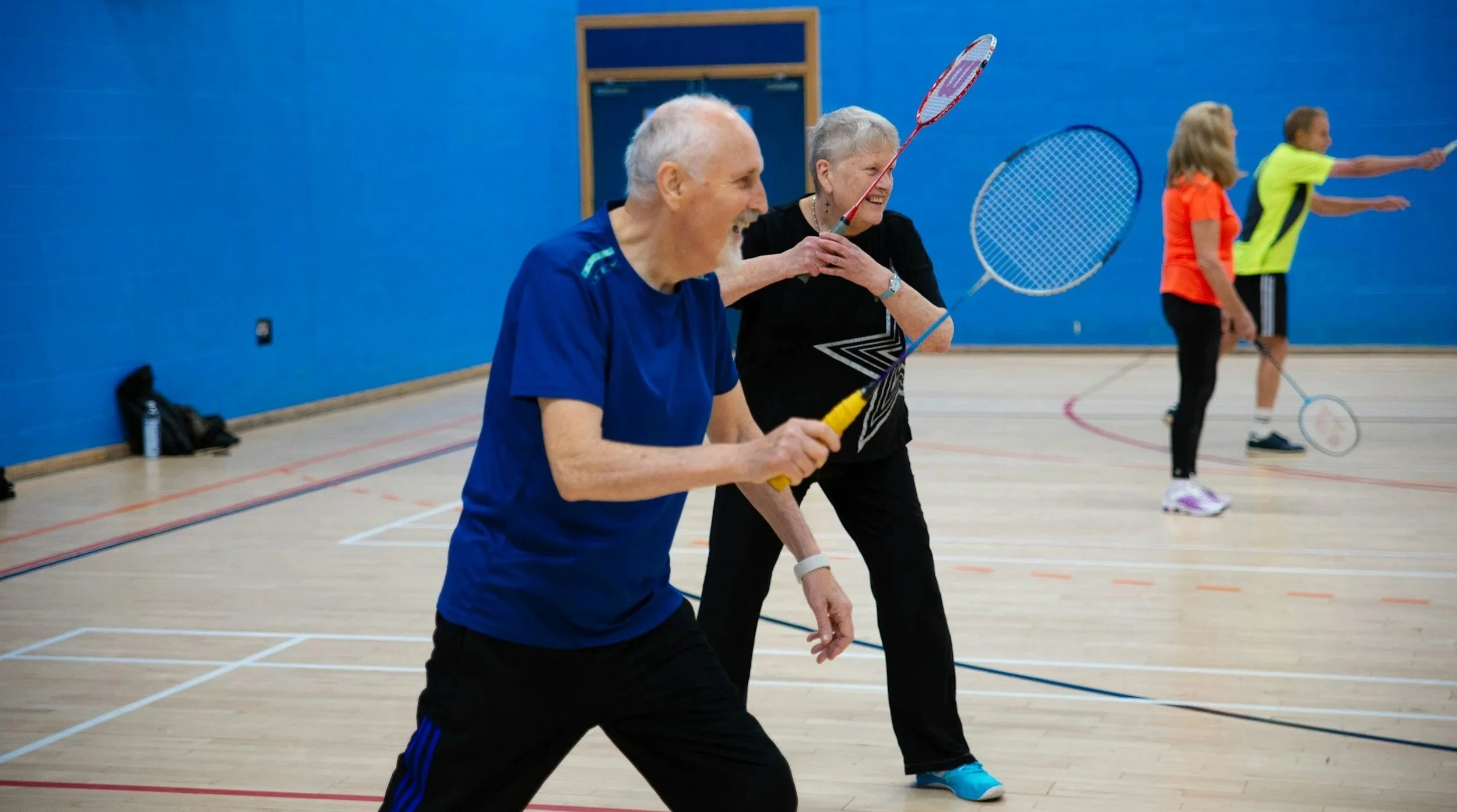
The National Institute on Aging consistently emphasizes that strength training, balance work, and regular aerobic activity can improve function at almost any age. Research shows that even individuals in their 80s and 90s can gain measurable strength and mobility with proper training.
That’s powerful. Because it means decline is not always destiny.
Why It Sneaks Up on People
Deconditioning rarely happens overnight. It often starts with something small: a minor injury, a stressful life event, a bout of illness, retirement, loss of a spouse, a move.
Activity drops a little. Then a little more. The body adapts downward. And then the story becomes, “I guess I’m just aging.” But the body doesn’t know how old you are. It only knows what you’re asking it to do.
Social Engagement Is Physical Health
There’s another piece that doesn’t get talked about enough: community. My mom doesn’t just stay active physically. She stays active socially. She travels to visit friends. She spends time with younger people. She keeps learning. That matters.
The Centers for Disease Control and Prevention has linked social isolation in older adults with increased risk of cognitive decline, heart disease, and even premature death. Movement and connection go hand in hand.
When you engage socially, you move more. You walk more. You get dressed and go out. You use your brain. You problem solve.
Activity feeds activity.
So What Can You Do?
If you’ve noticed that things feel harder than they used to, don’t automatically assume it’s “just aging.”
Ask yourself:
Have I been challenging my strength lately?
Am I practicing balance?
Am I walking with purpose?
Am I getting up and down from the floor?
Am I spending time around people who energize me?
Small, consistent challenges create adaptation. You don’t need extreme workouts. You need regular stimulus.
Strength training at least twice a week.
Balance work built into daily routines.
Walking with intent.
Practicing getting up and down from lower surfaces.
Those are not “young people” activities. They are independence activities.
The Bigger Picture
The CDC recommends that adults 65 and older engage in muscle-strengthening activities at least two days per week and include balance training regularly. Yet many adults fall short of those guidelines.
When we fall short, we slowly shrink our physical world. When we challenge ourselves appropriately, we expand it. Slowing down is not automatically aging. Often, it’s the result of less movement, less challenge, less engagement. And the beautiful thing about deconditioning? It can be reversed. Not perfectly. Not magically. But meaningfully.
I’ve seen it happen at 60. At 70. At 80. Even beyond. The body responds when we give it a reason to. So maybe the better question isn’t, “Am I getting old?” Maybe it’s, “Have I stopped asking my body to rise to the occasion?”
Because as my almost-89-year-old mom exploring Vietnam reminds me — staying young is less about the number and more about the choice to keep moving forward.
Ready to Start Moving Forward?
If you've been wondering whether what you're experiencing is truly aging or simply a loss of strength, balance, and confidence that can be improved, I'd love to help.
You don't have to figure it out on your own. Whether you're looking to improve your balance, build strength, increase your energy, or simply feel more confident in your daily activities, the right starting point can make all the difference.
Join one of our welcoming classes, where you'll find expert guidance, encouragement, and a supportive community of people working toward similar goals. Or, if you'd prefer a more personalized approach, schedule a free consultation and we'll discuss your specific concerns, goals, and the best path forward for you.
No matter your age or current fitness level, it's never too late to challenge your body, improve your function, and reclaim confidence in your movement.
Contact ProActive Therapy & Wellness today to schedule your free phone consultation or try a class.