
Heel Pain, Wobbles, and Walking
The Surprising Link Between Plantar Fasciitis and Falls
If you’ve been in my circle for a while, you already know I’m a big believer that balance is never about just one thing. It’s strength, vision, reaction time, joint mobility, sensory input — it’s a whole team working together.
And there’s one team member we can’t stress enough — your shoes.
And when you add plantar fasciitis into the mix, footwear becomes even more important.
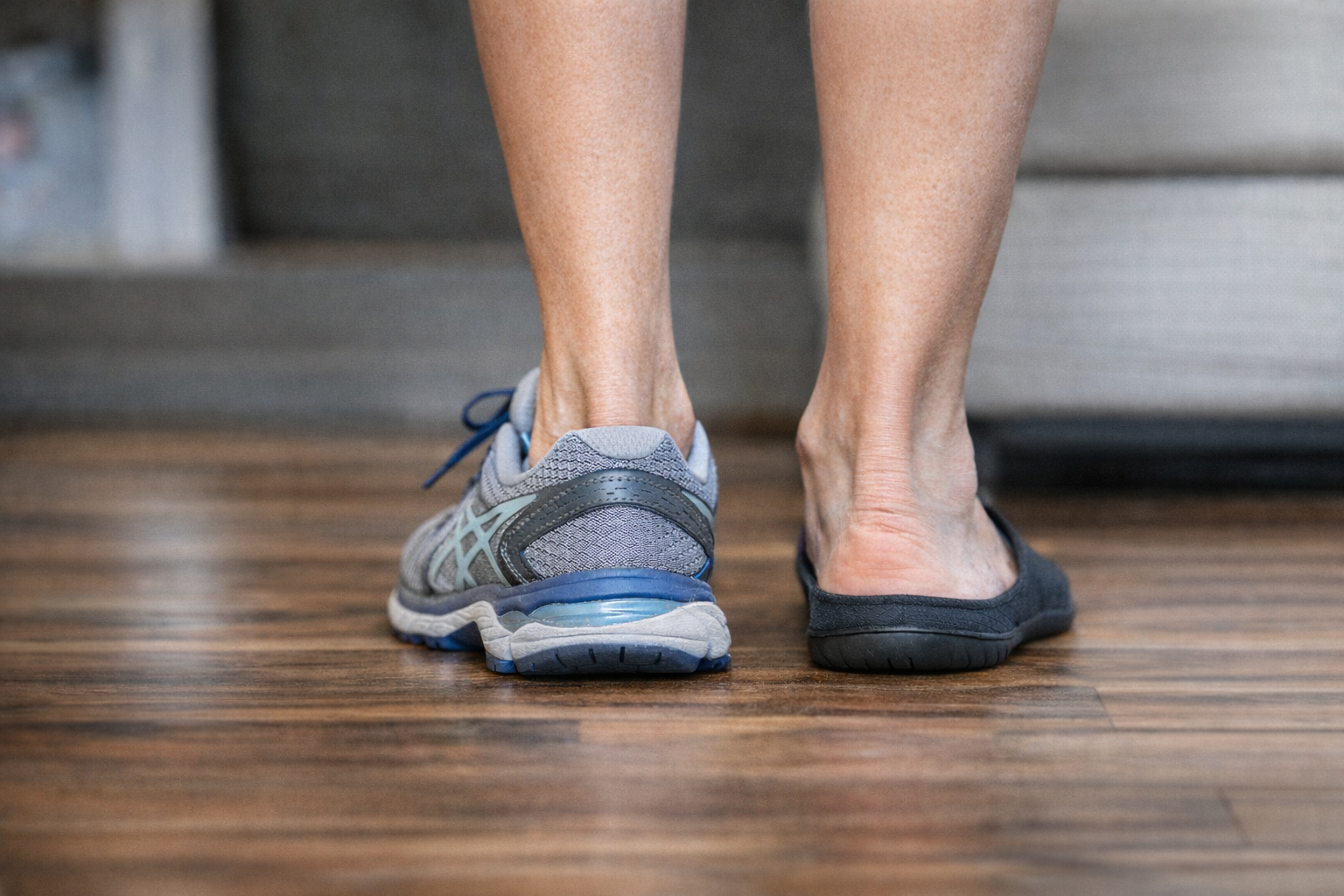
Your Feet Are Your Foundation
Your feet are packed with nerve endings that constantly send information to your brain about pressure, position, and surface changes. That sensory feedback is a huge part of how your body keeps you upright.
The CDC reports that falls are the leading cause of injury in adults 65 and older. And while we often focus on strength and balance exercises (which absolutely matter), people rarely look at what’s happening between the foot and the floor. Shoes can either enhance or interfere with the feedback your brain depends on.
Now layer in plantar fasciitis — and things get even more complicated.
What Is Plantar Fasciitis, Really?
Plantar fasciitis is inflammation or irritation of the plantar fascia, the thick band of tissue that runs along the bottom of your foot from the heel to the toes. It’s one of the most common causes of heel pain, especially in adults over 50.
The NIH notes that plantar fasciitis is particularly common in middle-aged and older adults and in those who spend a lot of time on their feet. It’s also more likely when there are changes in activity level, weight gain, tight calves, or limited ankle mobility.
That sharp, stabbing heel pain first thing in the morning? Classic plantar fasciitis. And when it hurts to move, then you change the way you move.
Pain Changes Balance — Even Subtly
When you have plantar fasciitis, you unconsciously shift your weight away from the painful heel. That can lead to:
A shorter stride
Reduced push-off through the toes
Increased load on the opposite leg
More tension through the calves and Achilles
Altered hip and back mechanics
Over time, that compensation can affect balance. Even mild discomfort can reduce how confidently someone loads their foot. And when confidence decreases, stability often follows.
I see this frequently. Someone says, “It’s just heel pain.” But when we test single-leg balance on the painful side, there’s hesitation, wobbling, or avoidance.
Pain doesn’t just hurt — it changes movement patterns.
The Footwear Dilemma with Plantar Fasciitis
Many people with plantar fasciitis are told to wear highly cushioned shoes. And yes, cushioning can reduce impact and make walking more comfortable, especially early on. But excessively soft, thick soles can reduce ground feedback. It’s like standing on a pillow. For someone already dealing with slower reaction time or mild neuropathy, that loss of sensory clarity can make balance worse.
On the other hand, going completely barefoot on hard floors can aggravate heel pain and increase strain on the fascia.
So it’s not about “minimal” versus “maximal.” It’s about the right support at the right time.
Arch Support and Stability
For many adults with plantar fasciitis, appropriate arch support helps distribute pressure more evenly and reduce strain on the heel. But support doesn’t mean stiff and rigid in all directions. A shoe can provide arch structure while still allowing the toes to spread and function naturally.
A wide toe box is especially important. Your toes are part of your balance system. When they’re squeezed together, you lose a bit of your natural base of support.
Weak intrinsic foot muscles are often part of the picture in plantar fasciitis. If shoes do all the work, those muscles never strengthen. That’s why I often recommend a gradual transition — using supportive shoes during longer walks, but also incorporating specific foot strengthening exercises so the foot becomes more resilient over time.
Calf Tightness, Posture, and the Chain Reaction
Plantar fasciitis is rarely just about the bottom of the foot. Tight calves increase tension on the plantar fascia. That limited ankle mobility alters gait. And if someone starts walking more stiffly to avoid heel pain, that stiffness travels up the chain to the knees, hips, and low back.
We’ve talked before about how posture influences breathing and balance. Foot pain can quietly contribute to a more guarded, forward-shifted posture, especially if heel strike becomes uncomfortable. Everything is connected.
What I Typically Look For in Footwear (Especially 50+)
For my clients dealing with plantar fasciitis and balance concerns, I usually look for:
A firm but thin sole
Mild cushioning
Arch support matched to the individual
Wide toe box
Secure heel fit
Little to no heel lift
And I always remind people — what works during an acute pain flare may not be what you need long term. The goal is to calm the irritation, restore mobility, strengthen the foot, and gradually improve how the foot interacts with the ground.
Why This Matters More As We Age
As we get older, reaction time slows slightly. Muscle strength can decline. Vision may not be as sharp as it once was. The margin for error gets smaller. Add foot pain or unstable footwear, and that margin shrinks even more.
According to the CDC, one in four adults over 65 falls each year. Many falls happen at home — often while wearing slippers or unsupportive shoes. If plantar fasciitis is already making you cautious or altering your gait, footwear choices become even more important.
The good news? This is a modifiable factor. You can’t change your birth date, but you can change your shoes… You can stretch your calves… You can strengthen your feet… You can address pain before it turns into compensation patterns.
The Bottom Line
Plantar fasciitis isn’t just heel pain. It can subtly affect balance, confidence, posture, and walking mechanics — especially in adults over 50. And footwear can either help calm the irritation and support stability… or quietly make both worse.
If you’re struggling with heel pain or feel less steady than you used to, it’s worth looking down before assuming something bigger is wrong. Sometimes the path to better balance really does start from the ground up.
And as always, if you’re curious whether your footwear — or your foot mechanics — are contributing to instability, that’s something we can look at together. Small adjustments can make a bigger difference than most people expect.
Next Steps
Looking for some ideas on how to improve your foot strength and flexibility? Check out this video for a few exercise suggestions.