
Stand Taller, Breathe Easier
What Your Spine Has to Do With Your Lungs
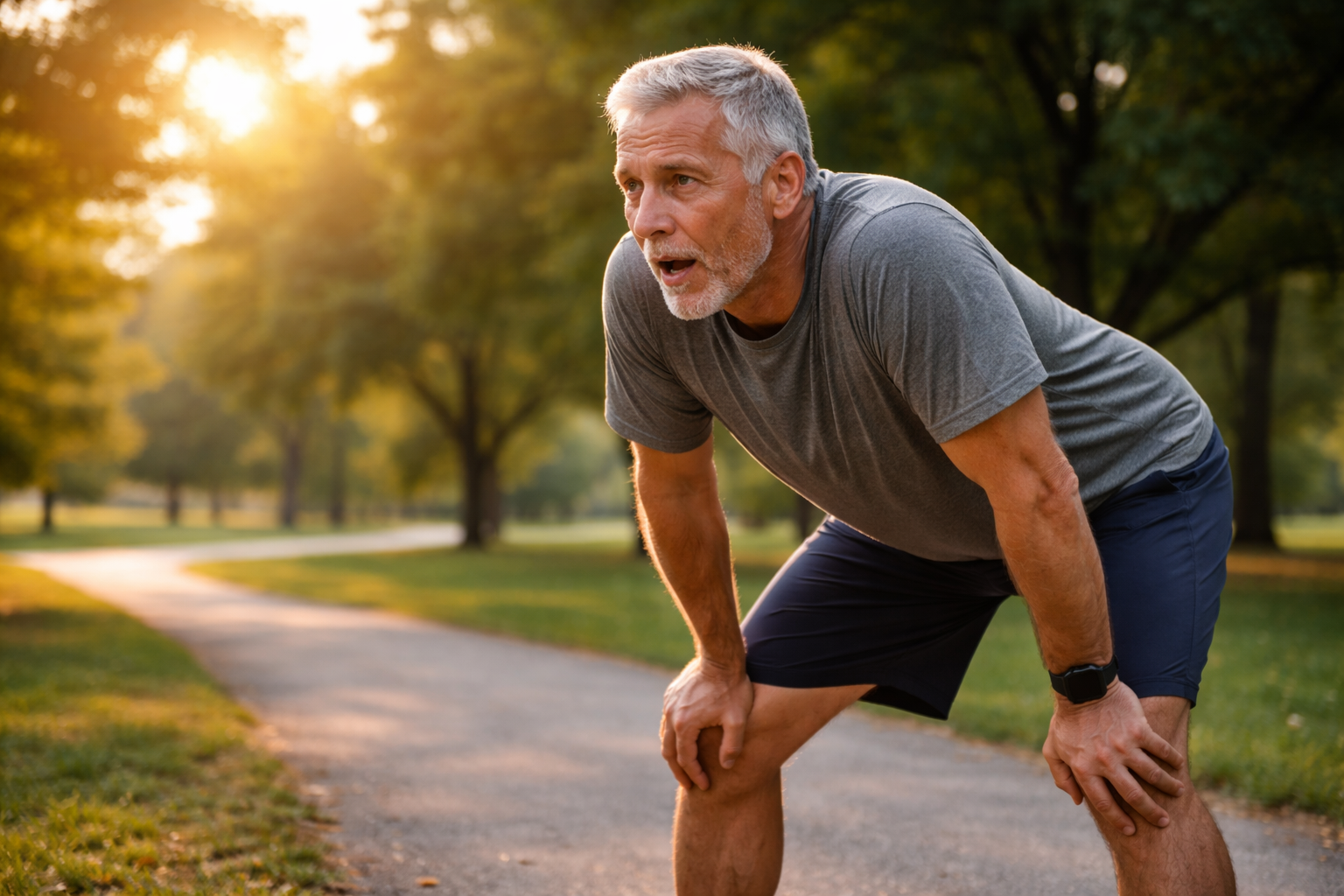
Have you ever noticed that when someone gets out of breath, their first instinct is to bend forward and put their hands on their knees? We’ve all done it.
Whether it’s after climbing stairs, finishing a fast walk, or pushing through a tough workout, the body almost automatically folds forward. That position has a name. It’s called the tripod position. And it tells us something really important about how posture and breathing are connected.
As a physical therapist who works primarily with adults over 60, I see this connection play out every single day. Many people come in focused on balance, strength, or pain. But when we start looking closer, posture and breathing are quietly influencing everything. Let’s unpack why.
Your Lungs Don’t Work Alone
Breathing isn’t just about your lungs. It’s about your rib cage, your spine, your diaphragm, and even your abdominal muscles.
The diaphragm is your primary breathing muscle. It sits under your lungs like a dome. When it contracts, it moves downward and creates space for your lungs to fill with air. When it relaxes, air flows out.
Now here’s the part most people don’t think about: your spine and rib cage need to move well for your diaphragm to do its job efficiently.
If your upper back is stiff and rounded forward, the ribs don’t expand as easily. If your shoulders are collapsed inward, the chest doesn’t open well. Over time, that can limit how deeply you breathe.
According to the National Institutes of Health, age-related changes in the chest wall and spine can reduce respiratory efficiency. Add in years of sitting, driving, computer work, and maybe some osteoporosis-related rounding, and breathing can become more shallow without you even realizing it.
Why Do We Lean Forward When We’re Out of Breath?
That forward-leaning, hands-on-knees position — the tripod position — isn’t random. It’s actually a mechanical advantage.
When you lean forward and support your arms, you stabilize your shoulder girdle. This allows accessory breathing muscles in your chest and neck to assist the diaphragm more effectively. Muscles like the sternocleidomastoid and scalene muscles can lift the rib cage more efficiently when your arms are fixed. This position can also improve the length-tension relationship of the diaphragm, helping it contract more effectively.
It’s commonly used by people with chronic lung conditions like COPD, and it’s even discussed in respiratory care literature as a strategy to ease shortness of breath. The Centers for Disease Control and Prevention notes that chronic respiratory conditions become more common with age, making posture and breathing strategies even more relevant for adults over 50.
But here’s the most important part: if you constantly live in a slightly slouched posture, your body may be working harder to breathe all day long — not just when you’re exercising.
The Slouch–Breath Cycle
Rounded shoulders and a forward head posture do more than affect how you look. They compress the front of the chest and limit rib mobility. That often leads to:
Shallower breathing
Increased reliance on neck and shoulder muscles
Neck tension and headaches
Fatigue
Reduced endurance
When breathing becomes shallow, oxygen exchange may become less efficient. You may feel winded sooner. You may fatigue faster during activities like walking, gardening, or climbing stairs.
And here’s where it really matters for my community of active older adults: decreased endurance can quietly limit independence.
If stairs feel harder…
If carrying groceries feels more exhausting…
If you avoid longer walks because you get winded…
That’s not just “getting older.” Sometimes it’s mechanics.
Posture, Balance, and Breathing Are Teammates
When posture shifts forward, your center of gravity shifts too. That can impact balance and increase fall risk, especially in adults over 60. A forward head and rounded spine move your body weight slightly ahead of your base of support. Now your hips and ankles have to work harder to keep you upright. If breathing is shallow on top of that, your core stability can be compromised.
Your diaphragm isn’t just a breathing muscle. It also contributes to core stability and trunk control. So when breathing improves, posture often improves. And when posture improves, breathing often becomes easier. They’re connected.
A Simple Experiment
Try this: Sit in a slouched position. Round your shoulders. Let your head drop forward slightly. Take a deep breath.
Now sit tall. Gently lengthen through the crown of your head. Open your chest without arching your low back. Relax your shoulders. Take another deep breath.
Feel the difference? Most people immediately notice they can breathe more fully when upright.
What This Means for You
If you’re over 50, especially if you’re noticing reduced endurance, chronic neck or upper back tension, or feeling winded with activity, posture deserves attention.
You can do that by
Improving thoracic mobility
Strengthening postural muscles
Practicing diaphragmatic breathing
Breaking up long periods of sitting
These small changes can make a big difference over time.
You don’t need to stand rigid and military-straight. In fact, that can create tension. What you want is dynamic alignment — posture that adapts, moves, and allows your rib cage and diaphragm to do their job. And yes, the tripod position is helpful when you’re truly winded. It’s a smart, natural strategy. But if you find yourself constantly leaning forward just to feel like you can get a decent breath, that’s a signal worth paying attention to.
Breathing well supports stamina. —> Stamina supports movement. —> Movement supports independence.
And that’s something I care deeply about.
If this topic resonates with you, pay attention the next time you feel short of breath. Notice your posture. Notice how your body responds. Small awareness shifts often lead to powerful changes. Because sometimes the hidden connection is the one that makes the biggest difference.
📽️ Watch my podcast to learn more.
🧘🏼♂️ Check out this YouTube video for an easy posture exercise.
👉 If you’re local and want a personalized plan to improve posture, balance, and endurance, schedule a free consultation.
Stay active. Stay upright. Keep moving.