
Stronger Hips, Easier Steps
If you’ve ever noticed that your steps feel shorter than they used to, that stairs are becoming more of a negotiation than a normal part of your day, or that your low back aches after being on your feet… your hips might be trying to get your attention.
In my many years working with adults over 60, I’ve seen this pattern again and again. Someone comes in thinking they have a “knee problem” or a “back problem,” but when we really look at how they move, the hips are often the missing link.
Let’s talk about why.
Your Hips: The Engine of Your Movement
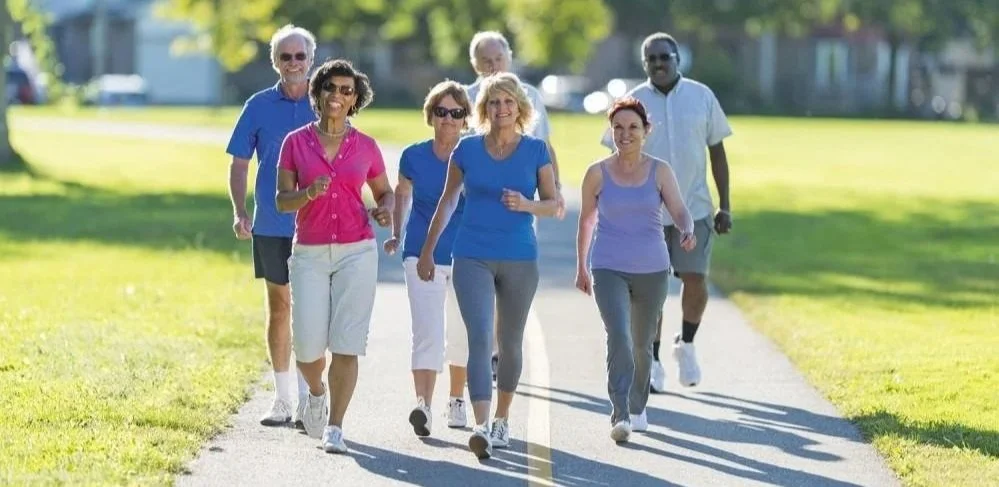
Your hips are your body’s main power center for walking, climbing, standing up, and even maintaining balance. The large muscles around the hips — especially the gluteus maximus and gluteus medius — help stabilize the pelvis and generate forward movement.
According to the National Institute on Aging (NIA), maintaining lower body strength is one of the most important factors for preserving mobility and independence as we age. The Centers for Disease Control and Prevention (CDC) also highlights lower extremity weakness as a major contributor to falls in adults 65 and older.
When the hips are strong, they:
Keep your pelvis level while you walk
Help you push off the ground efficiently
Protect your knees and lower back
Support balance when you shift weight
When they’re weak, other parts of the body start working overtime.
How Weak Hips Change Your Walking Pattern
One of the most common signs of weak hip muscles is something called a Trendelenburg pattern — that slight dropping of one hip when you stand on the opposite leg. You may not notice it, but your body does.
When the hips don’t stabilize properly:
You may develop a side-to-side sway while walking.
Your steps may get shorter.
You may feel less steady, especially on uneven surfaces.
Over time, this inefficient pattern increases energy expenditure. Walking feels harder. You fatigue more quickly. And for many adults over 60, that subtle instability can increase fall risk.
The CDC reports that one in four adults over 65 falls each year. Weakness in the lower body is a major modifiable risk factor. The good news? It’s something we can address.
Why Stairs Feel So Much Harder
Stairs demand more from your hips than level walking. When you step up, your gluteus maximus must extend the hip to lift your body weight against gravity. When you step down, your hip muscles must control your descent.
If those muscles are weak:
You may rely heavily on the railing.
You may pull yourself up with your arms.
You may lead with the same leg every time.
You may feel pain in the knees.
I often tell my clients that if stairs are becoming difficult, it’s not just about the stairs. It’s about power. The ability to generate force quickly — something that naturally declines with age unless we train it.
The NIH has noted that muscle mass and strength decline progressively after age 50, a process called sarcopenia. Without intentional strengthening, this decline accelerates.
The Hidden Link Between Weak Hips and Back Pain
This is where it gets really interesting.
When hip muscles are weak, the lower back often compensates. Instead of the hips absorbing and producing force, the lumbar spine takes on extra stress.
That can lead to:
Chronic tightness in the low back
Facet joint irritation
Muscle spasms
Increased pressure on spinal structures
Research published through the NIH has shown an association between hip abductor weakness and chronic low back pain. In simple terms, if the hips aren’t doing their job, the back tries to do it for them.
And the back isn’t designed to be the primary power source for walking or climbing stairs.
Why This Matters More After 60
After age 60, we naturally lose muscle mass and power more quickly. Hormonal changes, decreased activity levels, and even fear of falling can create a cycle of less movement → more weakness → more instability.
For many people, the first signs are subtle:
“I just feel slower.”
“I don’t trust my balance like I used to.”
“My back gets sore when I’m on my feet too long.”
The key is catching it early.
The encouraging part? Muscle responds to training at any age. The National Institute on Aging consistently emphasizes that strength training improves mobility, balance, and independence even in adults in their 80s and 90s.
It’s never too late.
What I Look for in the Clinic
When someone comes in concerned about walking, stairs, or back pain, I’m not just looking at the painful area. I’m watching:
How level the pelvis stays during single-leg stance.
Whether they can control stepping down.
How quickly they fatigue.
How easily they can get up from a chair.
Weak hips rarely show up alone. They’re often tied into balance systems, flexibility limitations, and confidence. That’s why a comprehensive look at strength, stability, and movement patterns matters so much.
The Bigger Picture: Independence
This isn’t about building bodybuilder muscles.
It’s about being able to:
Walk through the grocery store without leaning on the cart.
Climb stairs at church without fear.
Travel and explore.
Play with grandchildren.
Stay in your own home safely.
Strong hips protect your knees, support your back, and reduce fall risk. They give you the power and control that make movement feel easier instead of exhausting. And that’s what keeps people independent.
A Gentle Invitation
If you’ve noticed walking feels harder, stairs feel intimidating, or your back seems to flare up after activity, it may be worth looking upstream at your hips.
A focused strength and balance assessment can uncover what’s really driving those changes. From there, we can create a targeted plan — not a generic exercise sheet — but something designed specifically for how your body moves.
Because when the hips get stronger, everything else tends to feel lighter. And that’s a pretty good place to start.
🚶🏼♂️Want a professional opinion about how you’re walking? Schedule a free consultation.
💪🏽Want some ideas on specific exercises to improve your hip strength? Click here to watch a video of some exercises you can do in the comfort of your own home.
📽️ Watch the podcast for more details.