
The Vagus Nerve: Your Body’s Secret to Feeling Calm and Reducing Inflammation
The Overlooked Key to Better Sleep, Less Stress, and Reduced Pain
Have you ever noticed how your body reacts when you’re stressed? Your heart starts racing, your breathing gets shallow, your muscles tighten… and it feels like you just can’t relax.
Now think about the opposite feeling—when you’re calm, your breathing slows, your shoulders drop, and everything just feels a little easier.
That shift between stress and calm isn’t random. A big part of it is controlled by something called the vagus nerve—and it’s one of the most important (and often overlooked) systems in your body. Especially as we get older, learning how to support this system can make a real difference in how we feel day to day.
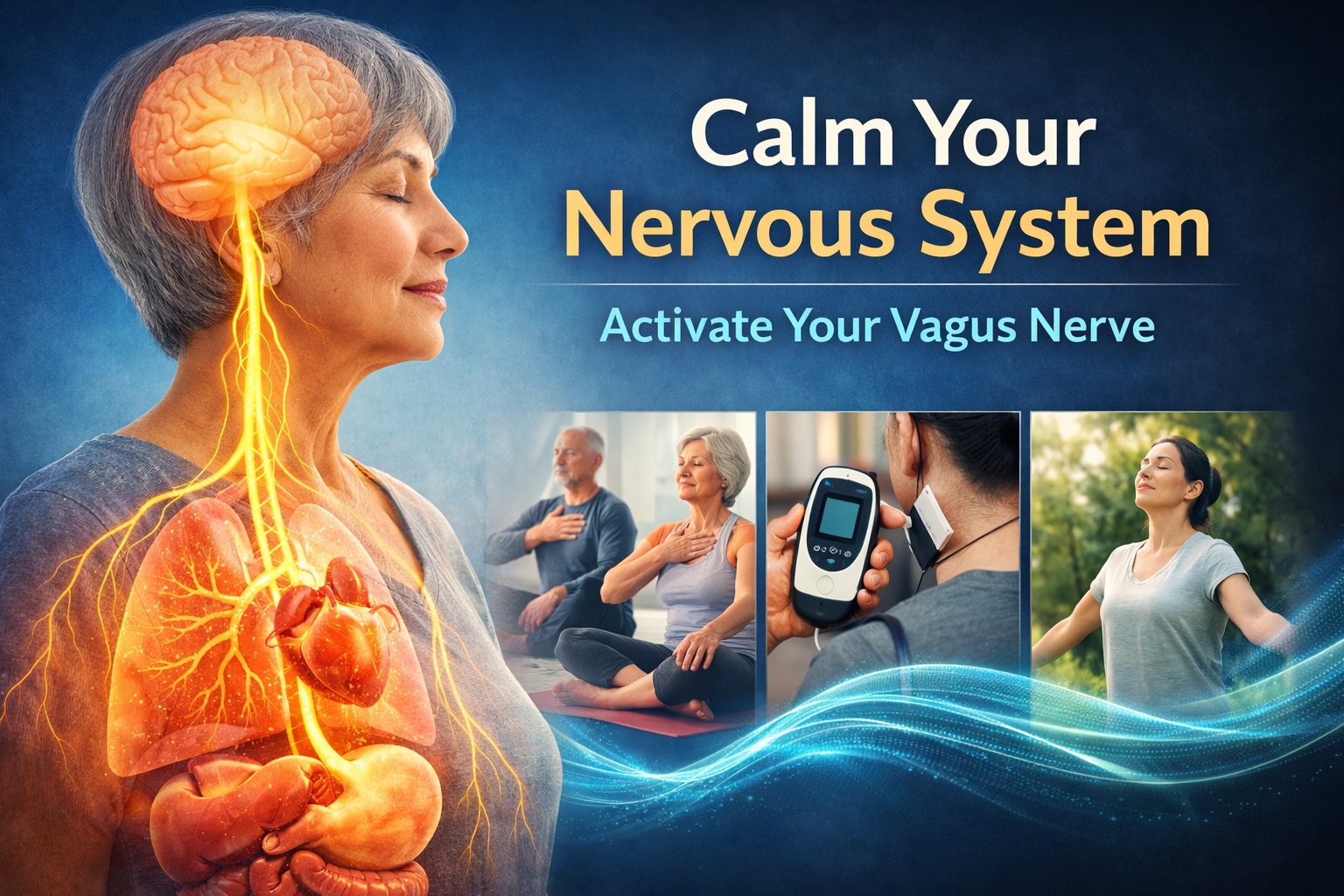
So… What Is the Vagus Nerve?
The vagus nerve is a long nerve that runs from your brain down into your chest and abdomen. It connects to your heart, lungs, digestive system—basically all the major players. Its main job is to help your body relax and recover. It’s part of what we call the “rest and digest” system.
The problem is, many of us spend a lot more time in the opposite state—the “fight or flight” mode. That’s the stress response. And while it’s helpful in short bursts, it’s not meant to be on all the time. When the body stays in that stressed state too long, it can lead to things like anxiety, poor sleep, digestive issues, and even increased inflammation.
Research supported by the National Institutes of Health (NIH) has shown that the vagus nerve actually helps regulate inflammation in the body through something called the inflammatory reflex. In simple terms, it helps keep your immune system from overreacting.
The Connection Between the Vagus Nerve and Anxiety
If you’ve ever felt anxious, you already know what it feels like when your nervous system is on high alert. Your heart speeds up. Your breathing gets shallow. You might feel tense or restless.
The vagus nerve helps bring things back down. When it’s working well, it helps slow your heart rate, deepen your breathing, and create that sense of calm. It’s like a built-in reset button.
Organizations like the CDC have emphasized how chronic stress can impact everything from heart health to immune function. And one of the ways we can counter that is by improving how well this calming system works.
Simple, Natural Ways to Activate the Vagus Nerve
Here’s the encouraging part—you don’t need anything fancy to start supporting your nervous system. Some of the most effective techniques are simple and accessible.
One of the easiest places to start is with your breathing. Slow, steady breathing—especially focusing on longer exhalations—signals to your body that it’s safe to relax. Even just a few minutes can make a noticeable difference.
Mindfulness and meditation are also powerful tools. These practices help quiet the mind and reduce the constant “background noise” of stress. Over time, they can actually improve how responsive your nervous system is.
Another one I love, especially for my clients, is body awareness. Things like body scans—where you slowly bring attention to different parts of your body—help release tension you may not even realize you’re holding.
And then there’s movement. Gentle, intentional movement like Tai Chi, yoga, or even slow, controlled exercises can be incredibly effective. When you combine movement with breathing and awareness, you’re giving your nervous system exactly what it needs to shift into a calmer state.
How We Use This in Classes at ProActive Therapy and Wellness
This is something we weave into a lot of what we do at ProActive Therapy and Wellness. Yes, we focus on strength, balance, and mobility—but we also pay attention to how your body is responding underneath all of that.
In many of our classes, we naturally incorporate things like breathing exercises, body scans, and moments of mindfulness. Not in a complicated way—just simple, practical tools that help your body relax and reset.
What’s interesting is that when people start to feel calmer and more connected to their bodies, we often see improvements in balance, movement, and even pain levels. It’s all connected.
Where Stimpod Can Fit In
Sometimes, though, the nervous system needs a little extra support—especially if someone is dealing with chronic nerve pain or long-standing issues. That’s where something like Stimpod therapy can come in.
Stimpod uses pulsed radiofrequency to stimulate nerves in a very targeted way. It’s non-invasive, and it’s most commonly used for things like neuropathy and chronic nerve pain.
What’s exciting is that by helping improve nerve signaling and communication, therapies like this may also support better overall nervous system function. For people who feel like they’ve “tried everything” and still aren’t getting relief, this can open up another option to explore.
Why This Matters More As We Age
As we get older, our bodies don’t bounce back from stress quite as easily as they used to. That’s why learning how to support your nervous system becomes so important.
When your body can shift into a calm, regulated state more easily, you may notice better sleep, less tension, improved digestion, and even better pain control.
And the best part? These are things you can start working on right away.
Let’s Figure Out What’s Right for You
If you’ve been dealing with chronic pain, nerve issues, or just feel like your body is constantly “on edge,” there are options.
Sometimes it’s as simple as learning a few breathing techniques. Other times, it might involve a combination of movement, mindfulness, and more advanced therapies like Stimpod.
If you’re not sure where to start, that’s exactly what we’re here for.
At ProActive Therapy and Wellness, we offer a free consultation where we can sit down, talk through what’s going on, and help you figure out the best next step for you. No pressure—just a conversation to point you in the right direction.
Because when your nervous system starts working with you instead of against you, everything else tends to get a little easier.