
Strength Training for Seniors
When and Why to Progress to Heavier Weights
There’s been a really positive shift in how we talk about exercise after 60. We’ve moved away from the “no pain, no gain” mindset and toward safer, more functional movement—and that’s absolutely the right direction.
But somewhere along the way, a different misconception started to creep in…
that strength training for older adults should only be light weights, bands, and gentle movement.
And that’s not the full picture.
Yes, body weight, resistance bands, and functional exercises are incredibly valuable. But if we stop there, we may actually be leaving one of the most powerful tools for maintaining independence on the table: progressive resistance with heavier loads.
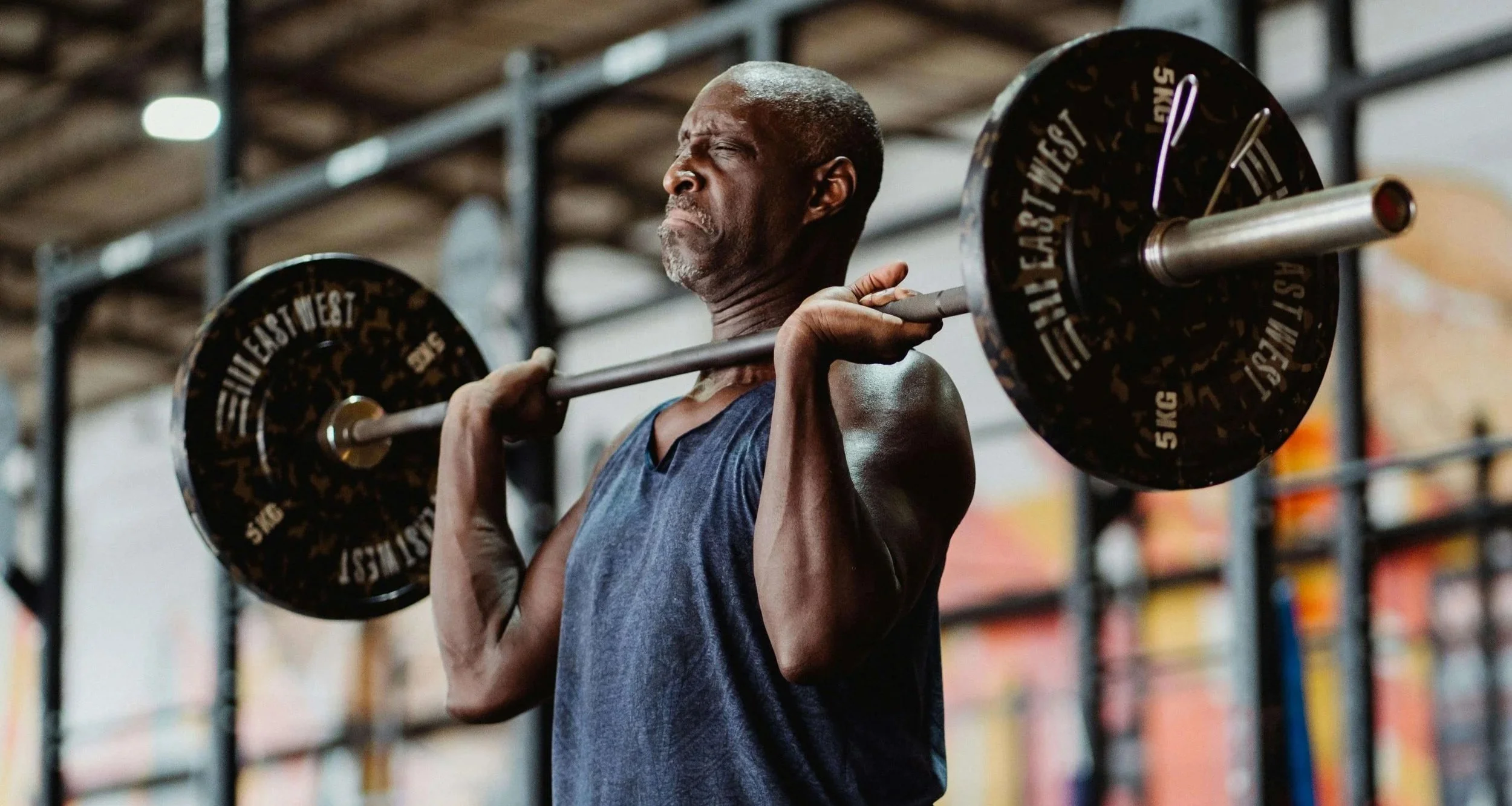
Your Body Still Needs a Reason to Get Stronger
As we age, we naturally lose muscle in a process called sarcopenia. That’s not new information. What’s important—and often overlooked—is that the body only builds strength when it’s given a reason to. That “reason” is called progressive overload—gradually increasing the demand placed on your muscles over time.
If the weight or resistance never really challenges you, your body doesn’t have to adapt.
Research supported by the National Institute on Aging shows that older adults can significantly improve muscle strength—even into their 80s and beyond—when resistance is sufficient to challenge the muscles. So while lighter resistance has its place, it shouldn’t be the only tool in your routine.
“Heavy” Is Relative—And That’s a Good Thing
Let’s redefine what “heavy” means, because it’s not about comparing yourself to anyone else.
“Heavy” simply means:
- a weight that feels challenging by the last few repetitions
- something you can lift with good form, but not indefinitely
- a load that makes your muscles say, “Okay, this is work”
For one person, that might be 5-pound dumbbells. For another, it might be 20 or more. The key is that it’s appropriately challenging for you.
Why Heavier Resistance Matters After 60
Stronger muscles don’t just help you move better… they help you respond better.
When you trip, reach, or lose your balance, your body has a split second to react. That reaction depends on both strength and speed.
Training with heavier resistance helps improve:
- muscle power (your ability to generate force quickly)
- bone density (which becomes critical as osteoporosis risk increases)
- joint stability under real-life demands
The Centers for Disease Control and Prevention consistently highlights resistance training as a key component of fall prevention—and higher intensity strength work plays a meaningful role in that.
It’s Not Either/Or—It’s Both
You don’t replace functional movement, balance work, or lighter resistance—you build on it.
A well-rounded program after 60 should include:
- functional, real-life movement patterns
- balance and coordination training
- mobility and flexibility work
- and progressive resistance that includes heavier loads
Think of it this way:
- bands and body weight help you move well
- heavier weights help you stay strong enough to keep moving well
They complement each other.
Safety Isn’t About Avoiding Challenge—It’s About Progressing Wisely
One of the biggest concerns people have is, “Is it safe for me to lift heavier?”
That’s a valid question—but safety doesn’t come from avoiding challenge altogether. It comes from:
- good form and technique
- gradual progression
- appropriate exercise selection
- listening to your body
When those pieces are in place, strength training with heavier resistance is not only safe—it’s incredibly beneficial.
Confidence Changes When You Feel Strong
There’s something that happens when you realize, “I can lift that.” It changes how you see yourself.
Carrying groceries feels easier.
Getting up from the floor feels more doable.
Even walking feels more stable.
That kind of strength builds a quiet confidence—and that confidence shows up in everything you do.
The Takeaway
Strength training after 60 shouldn’t be about playing it safe by staying light forever. It should be about meeting your body where it is—and then helping it grow stronger from there.
Body weight, bands, and functional movements are essential. But adding appropriately challenging resistance—including heavier weights—can take your strength, stability, and independence to a whole new level.
And that’s really the goal, isn’t it?
Not just to keep moving… but to keep moving well, with strength you can count on when it matters most.
If you’ve been sticking to lighter resistance and wondering whether it’s time to progress, that’s a conversation worth having. The right balance of challenge and safety can make all the difference in how strong—and how confident—you feel moving through your day.
If you’re ready to take that next step, you’re always welcome to join one of our small group classes where we focus on building real-life strength in a supportive environment. And if you’d prefer something more personalized, you can schedule a free consultation and we’ll talk through exactly what feels right for you and your goals.