
Biological Age vs. Chronological Age: What Your Movement Reveals
What Is Your Biological Age — and Why Does It Matter More Than Your Birthday?
Most of us know our chronological age — the number of candles on the cake. But over the years, I’ve learned that this number doesn’t tell the whole story.
In my many years working in home health with adults over 60, I often met people in their 60s and 70s who were already quite debilitated — folks who felt and moved as if they were 20 years older than they actually were. At the same time, I’d walk into the next home and meet someone in their 80s who was still active, steady on their feet, and living independently.
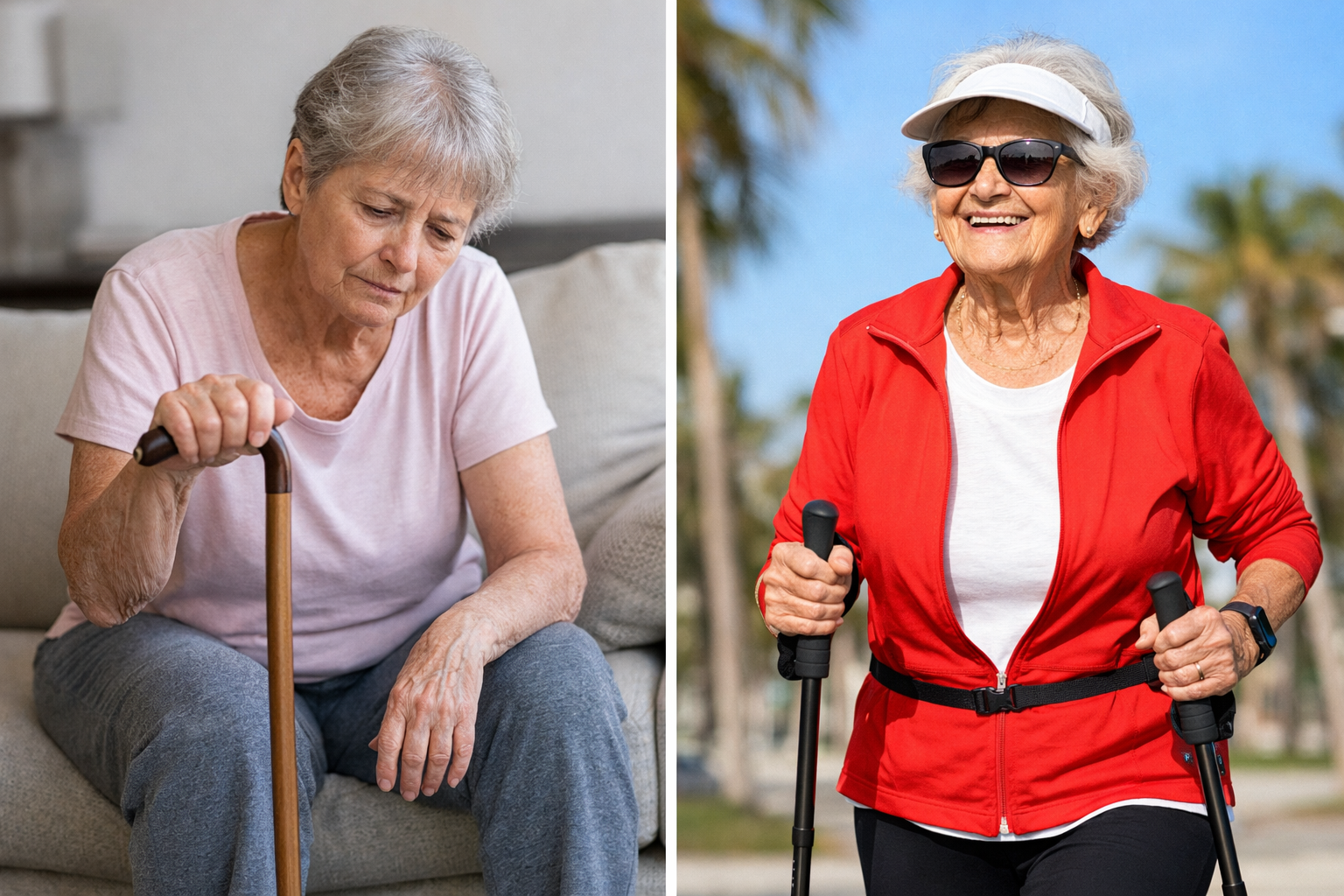
What made the difference wasn’t luck or genetics alone. It was how well their bodies were functioning day to day.
That’s what we’re really talking about when we talk about biological age. It’s not about the year you were born — it’s about how strong you feel getting out of a chair, how steady you feel walking through a parking lot, and how confident you are doing everyday things without worrying about falling.
And the best part is that biological age isn’t fixed. It can change, often more than people realize, with the right kind of movement and guidance.
How Do You Measure Biological Age?
There’s no single blood test or scan that tells the full story. In fact, some of the strongest predictors of healthy aging come from simple functional tests that look at how you move in everyday life.
That’s why I use a Functional Biological Age Screening built around five key areas:
1. Strength
Measured through grip strength and sit-to-stand ability. Strength is closely tied to independence, fall risk, and longevity.
2. Balance
Single-leg standing helps reveal how well your balance systems are working together.
3. Walking Speed
Gait speed is sometimes called the “sixth vital sign” because slower walking is linked with higher risk of falls, hospitalization, and loss of independence.
4. Endurance & Mobility
How easily you can move from sitting to standing and transition into walking matters more than most people realize.
5. Brain–Body Coordination
Dual-task walking (walking while thinking) reflects real-world challenges like talking while walking, navigating crowds, or carrying groceries.
Together, these tests create a snapshot of how your body is aging functionally.
What Do the Scores Mean?
The screening results are grouped into four simple categories:
Functioning younger than expected
Your movement, strength, and balance resemble someone younger. The focus here is maintaining gains and safely adding challenge.Age-expected function
You’re doing well overall, with room to improve specific areas.Accelerated biological aging
Certain systems are lagging, but the good news is these changes are very responsive to targeted exercise.Higher fall or mobility risk
Extra guidance and a structured plan can significantly improve safety and confidence.
This isn’t about judgment — it’s about direction.
The Most Important Takeaway: This Is Changeable
Unlike your birthday, biological age can improve.
Targeted exercise has been shown to:
Increase strength and power
Improve balance reactions
Speed up walking
Enhance confidence with daily activities
Reduce fall risk
Even small, consistent changes can make a meaningful difference — especially when exercises are chosen based on what your screening shows, not generic routines.
What Happens After the Screening?
Based on your results, I provide clear exercise priorities, such as:
Strengthening strategies if sit-to-stand scores are low
Balance and sensory training if single-leg stance is limited
Walking drills and posture work if gait speed is reduced
Brain-body challenges if dual-tasking causes hesitation or stopping
This ensures your time and effort are spent where they matter most.
Ready to Find Out Where You Stand?
Want to try a few of the tests yourself? Go here to submit your results to three simple self-tests and find out how you stack up.
If you’re curious about:
Your fall risk
Your current level of independence
Whether therapy or guided exercise could help
How to stay active and confident as you age
I invite you to schedule a free consultation phone call.
📞 Schedule Your Free Consultation
We’ll talk through:
Your goals and concerns
Any recent balance or mobility changes
Whether a screening or personalized plan makes sense for you
There’s no pressure — just a conversation to help you understand your options.
👉 Schedule your free consultation call here
Because aging is inevitable. Losing independence doesn’t have to be.